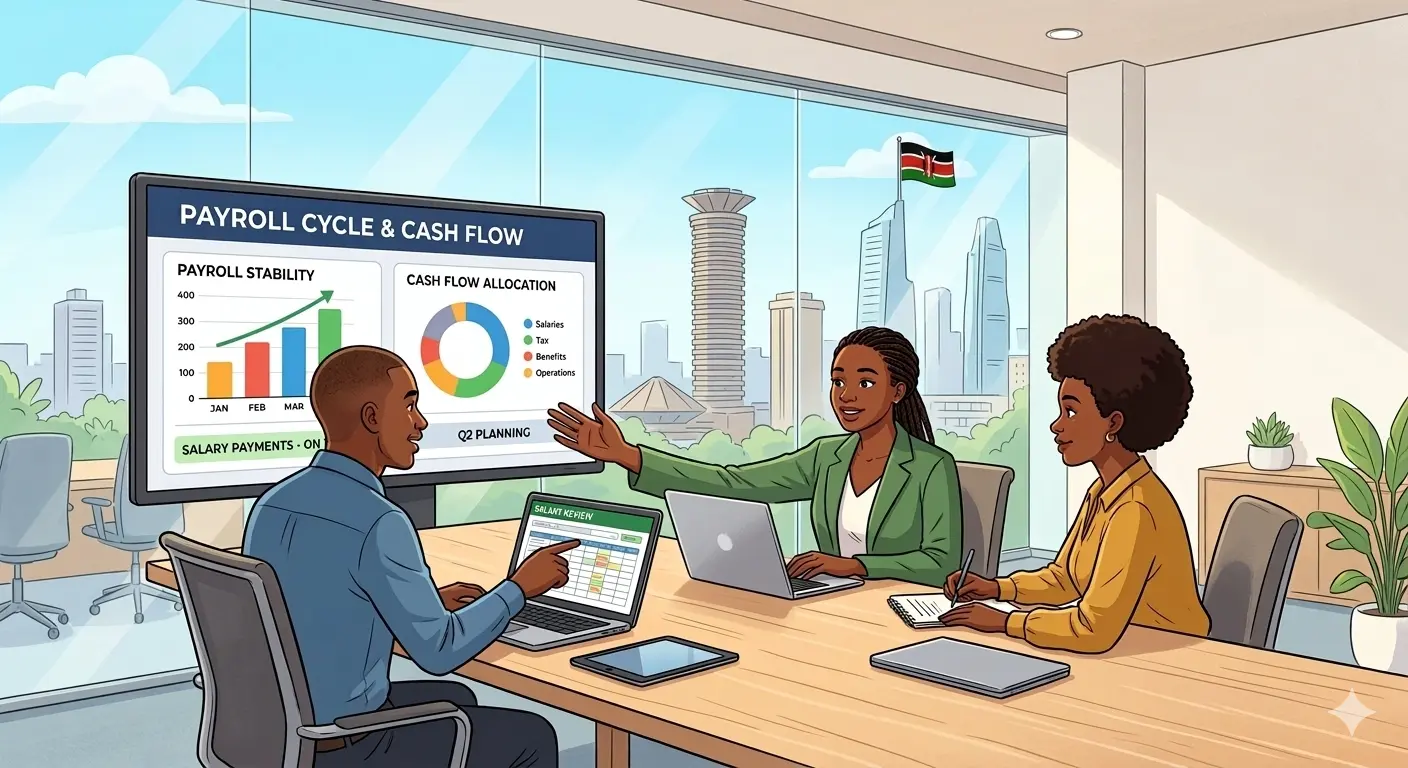
Salary payments are one of the few financial obligations businesses cannot delay without consequences. Employees expect to be paid on schedule, and organisations must honour that commitment regardless of what is happening in their revenue cycle.
However, many Kenyan businesses operate in environments where income does not arrive in perfectly predictable intervals. Client payments may take longer than expected, project settlements may happen in stages, and operational costs often compete for the same pool of working capital.
When these realities collide with fixed salary dates, companies experience what finance teams refer to as salary cash gaps.
Understanding how to manage these gaps has become an important part of financial planning for growing organisations in Kenya.
Why Salary Cash Gaps Are Increasing in Kenya
In many industries across Kenya, business growth has outpaced traditional cash flow structures.
Organisations are scaling their workforce faster than their payment cycles evolve. As teams grow, payroll obligations expand, but revenue timelines remain tied to contracts, milestones, or customer payment behaviour.
Several operational factors commonly create salary cash gaps.
- Contract-Based Payment Cycles – Many companies receive revenue only after project milestones are completed. This means cash inflows may arrive weeks after work has been delivered.
- Long Settlement Periods – In sectors such as logistics, manufacturing, and technology services, invoice settlement periods can stretch beyond standard payroll cycles.
- Rapid Workforce Expansion – When organisations hire quickly to support growth, payroll obligations increase immediately while revenue from new projects may take time to materialise.
- Multi-Department Budget Allocation – Large organisations must distribute working capital across procurement, operations, vendor payments, and payroll. This balancing act can occasionally create temporary salary funding pressure.
None of these factors necessarily signal financial instability. Instead, they reflect the complexity of managing working capital in a growing economy.
Why Payroll Stability Matters More Than Ever
When salary payments become uncertain, the impact spreads quickly across the organisation.
Employees rely on salary consistency for financial security. Even small disruptions can affect trust and morale.
Operationally, payroll instability can also create leadership challenges. Finance teams may need to divert resources from strategic planning to short-term problem solving. HR departments may face increased employee concerns, while senior leadership may have to manage internal expectations.
For these reasons, many companies now treat payroll stability as a core governance priority, rather than a routine administrative function.
How Kenyan Companies Are Addressing Salary Cash Gaps
Businesses typically respond to salary cash gaps in several ways.
Some companies temporarily redirect funds from other operational budgets. Others rely on overdrafts or short-term borrowing to meet payroll obligations.
While these approaches can solve immediate problems, they often introduce new financial pressures. Diverting funds may delay operational activities, while emergency borrowing can carry unpredictable costs.
As organisations grow, many finance leaders prefer a more structured solution that protects both payroll continuity and working capital discipline.
This is where payroll financing in Kenya has become increasingly relevant.
Payroll Financing as a Strategic Financial Tool
Payroll financing allows organisations to access short-term capital specifically allocated for salary payments.
Instead of waiting for revenue inflows to arrive, businesses can secure dedicated funding for payroll while maintaining liquidity for other operational priorities.
This approach offers several advantages. Payroll obligations become insulated from revenue timing fluctuations, allowing organisations to preserve working capital for core business activities. Employees continue to receive salaries on schedule, while finance teams avoid the pressure of making emergency funding decisions.
As a result, payroll financing in Kenya is increasingly used as a financial management strategy rather than a reactive measure.
Payroll Financing in Kenya Through SeamlessHR
SeamlessHR provides payroll financing to Kenyan organisations, it is designed to help organisations manage salary cash gaps while maintaining financial control.
Through this solution, businesses can access payroll working capital when salary dates arrive before expected inflows. The system integrates directly into payroll workflows, allowing finance teams to process salary payments efficiently while maintaining visibility across payroll operations.
Organisations using payroll financing by SeamlessHR can:
- Access funding dedicated to salary payments
- Run payroll disbursements seamlessly
- Maintain visibility across payroll transactions
- Automate statutory deductions and compliance requirements
- Operate under secure, regulated financial infrastructure
By combining payroll technology with structured funding, the solution allows organisations to maintain salary consistency without disrupting broader financial planning.
Explore payroll financing by SeamlessHR
A New Approach to Payroll Stability in Kenya
As businesses in Kenya continue to grow and operate across more complex revenue cycles, payroll stability will remain a critical component of financial management.
Organisations that proactively manage salary cash gaps are better positioned to maintain employee trust, sustain operational momentum, and protect long-term growth.
Payroll financing provides one of the most practical ways to achieve that stability.