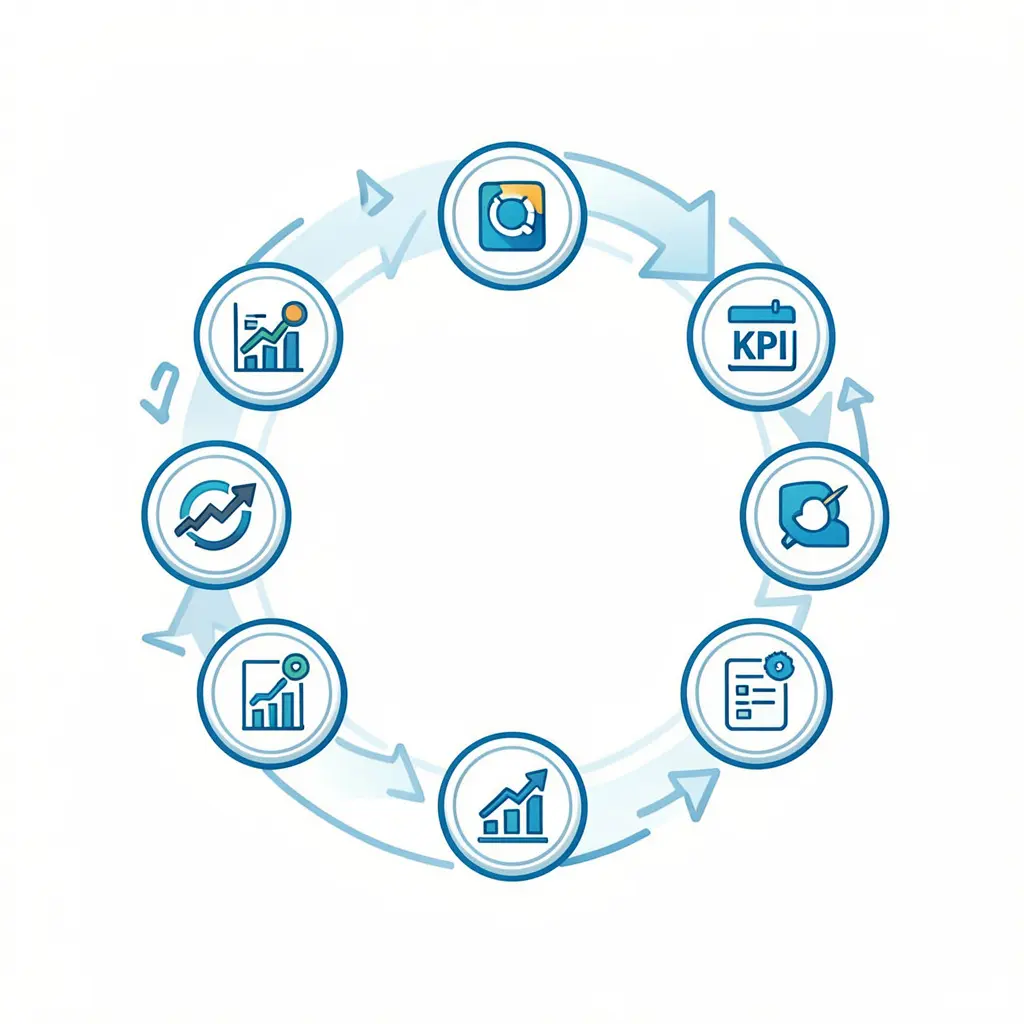
Employee performance management is the structured process organisations use to set goals, track progress, evaluate outcomes, and improve employee effectiveness. In Kenya’s competitive labour market, performance management helps organisations move beyond annual appraisals to continuous performance improvement.
Rather than focusing only on reviews, effective performance management aligns individual goals with business objectives. As a result, teams work with greater clarity, accountability, and motivation.
Core Elements of Effective Performance Management
Strong employee performance management includes several key components:
- 1. Clear Goal Setting – Organisations must define measurable goals at individual and team levels. For example, KPIs should reflect both role responsibilities and broader business priorities.
- 2. Continuous Feedback – Regular check-ins replace once-a-year appraisals. As a result, employees can adjust performance in real time.
- 3. Fair Appraisals – Performance reviews should rely on data, not opinions. Therefore, appraisal tools and documented criteria matter.
- 4. Development Planning – Performance management should identify growth opportunities, not just gaps. In addition, development plans help retain top talent.
Why Performance Management Matters in Kenya
Kenyan organisations face increasing pressure to improve productivity while managing diverse, fast-growing teams. However, many still rely on manual reviews and disconnected appraisal tools.
When performance management is weak:
- Managers struggle to measure outcomes objectively
- Employees lack clarity on expectations
- Appraisals feel subjective and demotivating
In contrast, organisations that adopt structured, system-driven performance management create transparency and consistency across teams.
How Technology Improves Performance Management
Manual performance tracking creates delays and bias. Therefore, modern organisations adopt performance management systems that centralise goals, feedback, and reviews.
SeamlessHR enables organisations to:
- Set clear performance goals across teams
- Run structured, data-driven appraisals
- Track performance trends over time
- Link performance outcomes to development decisions
As a result, performance conversations become fair, consistent, and actionable rather than subjective.
Book a free demo to see how SeamlessHR enhances employee performance management in Kenya.