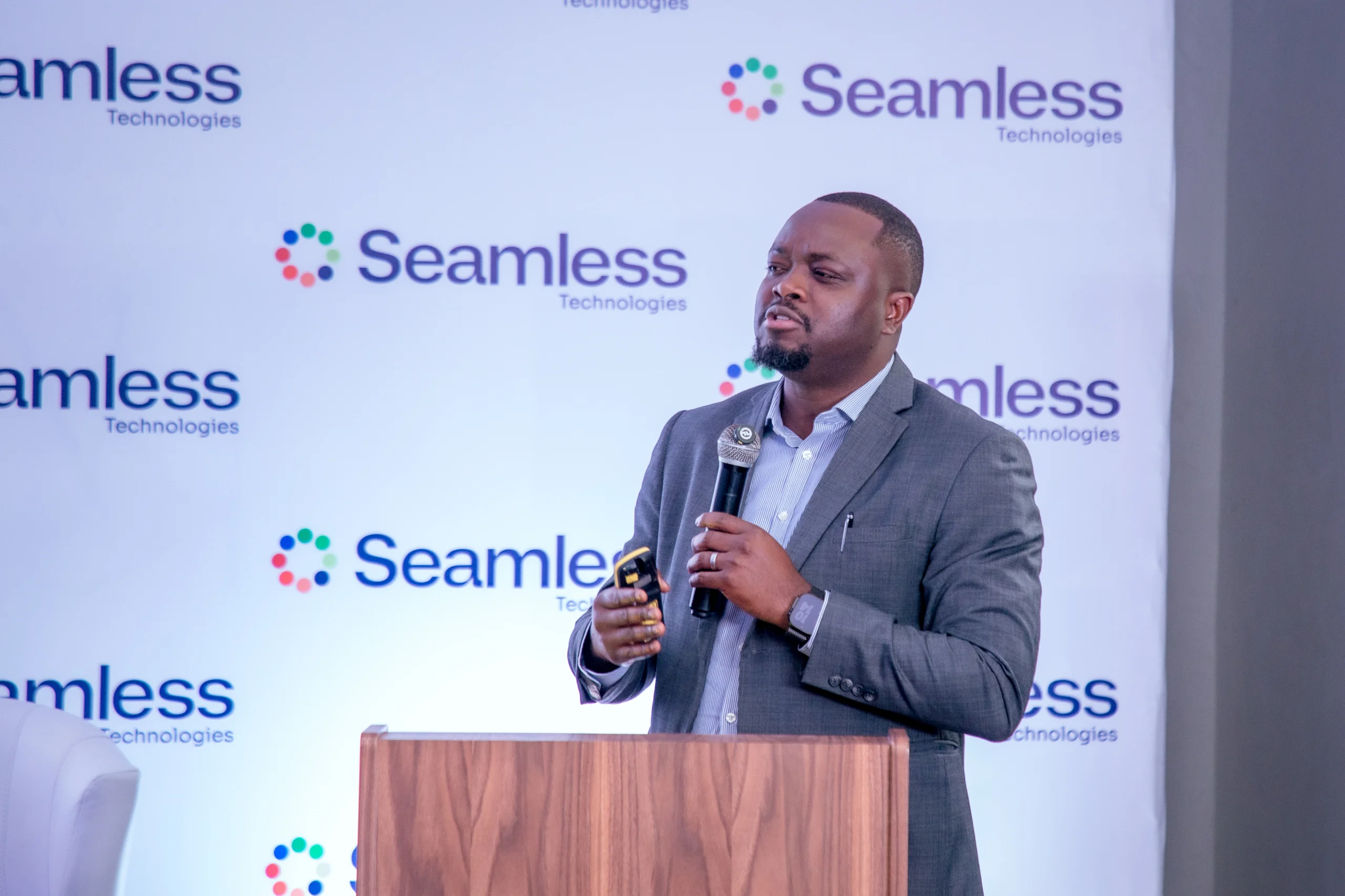
By Dr Emmanuel Okeleji, Co Founder and CEO, Seamless Technologies
There is a fundamental question HR leaders need to confront as the world of work changes at an unprecedented pace: what will the organisation still need HR to do when technology can increasingly perform many of the tasks that have traditionally defined the function?
This is no longer a distant question. Artificial intelligence is already changing how work is performed, how decisions are made and how organisations think about productivity. For the first time in human history, we are dealing with an alternative form of intelligence that can be accessed almost universally and is becoming capable of completing increasingly complex tasks. The pace of this development is also accelerating. Research cited in my recent presentation at the CIPM International Conference and Exhibition showed that the length of tasks AI agents can complete independently has been increasing at a rapidly shortening interval.
Eight years ago, when I spoke at the 50th CIPM International Conference and Exhibition in 2018, the conversation was very different. We were thinking about the rise of Generation Z and digital natives in the workplace. Today, we are looking ahead to a workplace where artificial agents and robots could play a dominant role in many areas of work.
By 2034, I believe the transformation will be significant enough that we may no longer even call the discipline Human Resources. That is not because HR will disappear, but because the nature of its contribution will have changed fundamentally. The routine processes that occupy much of HR today will increasingly be automated, leaving HR leaders with a more important question to answer: what value can they create that technology cannot?
This is where we need to rethink the role of the HR leader.
For years, HR has been responsible for recruitment, payroll, performance management, employee records, policies, compliance and a range of other processes that are essential to running an organisation. Technology has already made many of these processes faster and more efficient, and AI will take this considerably further. The implication is not that these functions will become irrelevant, but that spending most of HR’s time administering them will become increasingly difficult to justify.
The value of HR will therefore have to be measured by more than how efficiently it manages processes. HR leaders will need to understand the business, use data to make better decisions, understand what drives workforce performance and contribute directly to the outcomes the organisation is trying to achieve.
AI will be a major part of this shift. From mechanisation and electricity to automation and the internet, each major technological development has changed how humans work. AI represents the next significant step in that progression and may be the greatest accelerator of productivity we have seen.
HR cannot afford to stand outside that transformation. It must help lead it.
But productivity is only part of the conversation. The other question is what HR can do with its unique position to influence the prosperity of the people who work within organisations.
In Nigeria alone, approximately 27,000 HR professionals have significant responsibility for the livelihoods of tens of millions of people. That is an extraordinary level of influence, particularly when we consider how closely employment is connected to the financial lives of most workers.
For most employees, their salary determines much more than what they take home at the end of the month. It determines whether they can pay rent, afford healthcare, support their children, save for retirement, meet transportation costs and manage unexpected financial demands. Payroll is therefore not simply an administrative function. It is one of the most important points through which employers influence the economic lives of their people.
This gives employers an opportunity that is often underestimated. An organisation can provide more than a salary. Through the employment relationship, it can give people access to health insurance, pensions, savings, credit, housing, transportation and other benefits that improve financial security.
This is particularly important in Africa, where millions of workers remain underserved by formal financial systems. A worker with a reliable income and verifiable employment history should be able to use that information to access appropriate financial services, yet many workers cannot because the systems that connect employment, income and financial services remain fragmented.
This is where the power of aggregation becomes important. When employment and payroll information can be securely and responsibly aggregated, it creates a clearer picture of the worker and can support access to services that would otherwise be difficult to obtain. The opportunity is not simply to give employees more loans. It is to give them better access to healthcare, retirement savings, insurance, housing, mobility, education, essential assets and responsible credit.
That means the conversation around employee benefits also needs to evolve. We should be thinking about benefits, not just loans. A worker’s financial needs extend across many areas of life, and employers are uniquely positioned to provide or facilitate access to some of them.
There is also a strong business case for this approach. Better benefits can improve the financial security of employees while helping organisations attract and retain talent, strengthen engagement and create conditions in which people can perform better. Supporting employees is therefore not necessarily a choice between doing what is right for people and doing what is right for the business. It can achieve both.
This broader view of HR requires a different kind of leadership. The HR leader of the next decade will need to understand technology, data, business performance and the economic realities affecting the workforce. That does not mean every HR professional needs to become a technologist or a financial expert. It means HR leaders need to become more commercially aware, more curious about technology and more willing to experiment with new ways of working.
There is no need to wait for the future to arrive before beginning that work. HR professionals can start by using AI, testing its capabilities, understanding its limitations and exploring practical applications within their organisations. They can learn from peers and mentors, experiment with new tools and build a deeper understanding of how these technologies will affect their organisations and their people.
The responsibility is particularly important for African organisations. We cannot assume that the transformation taking place elsewhere will automatically translate into better outcomes for our institutions or our people. African businesses need to adopt these technologies while also ensuring that they address the realities of African workplaces and economies.
At Seamless Technologies, this is part of the reason we are investing in AI research and development. Our determination is to ensure that African institutions are not left behind as the technology develops, but are able to use it to improve productivity and create greater prosperity for the people who work in them.
Ultimately, however, technology is only part of the answer. The more important question is what we choose to do with it.
HR has an opportunity to move beyond process management and become a stronger force for productivity, better employee outcomes and economic prosperity. Employers have an opportunity to think differently about the relationship between wages, benefits and the financial wellbeing of their people. Technology companies have an opportunity to build systems that make these possibilities more accessible.
None of this will happen through technology alone. It will require HR leaders, employers, professional institutions and technology companies to work together.
I firmly believe that Seamless Technologies and the HR community can play a significant role in the prosperity of our nations. We can help restore decent, meaningful benefits and improve the lives of millions of people. It will require considerable work and partnership, but almost everything worth achieving does.
The question we should be asking is not whether HR will change. It will. The question is whether HR leaders will shape that change and use their position to create greater value for their organisations and greater prosperity for their people.
In 2034, when we look back at this period of extraordinary change, that may be the measure that matters most: not simply how successfully we adopted new technology, but what good we did with the opportunity it gave us.